

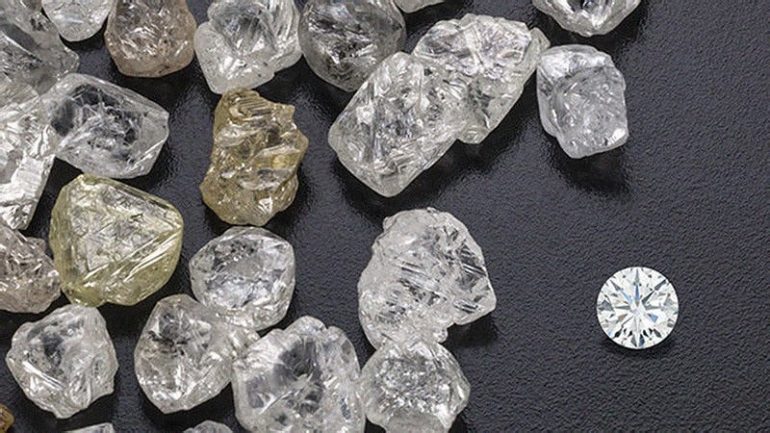
Exports of polished diamonds recorded significant performance throughout 2025, with sharp growth in terms of volume and value.
Between January and December 2025, 23.3 thousand carats of polished diamonds were exported, at an average price of US$ 4,705.74 per carat, corresponding to US$ 109.7million.
Compared to the same period in 2024, the results reflect a 126.5% increase in exported volume and a 107.0% growth in value. However, the average price recorded a slight decrease of 8.6%, influenced by the current international market situation, characterized by the continued growth in demand for synthetic diamonds and an oversupply of natural sourced polished diamonds.
Nevertheless, this average price level of US$ 4,705.74 reflects the high quality of the polished rough diamonds, characterized by superior standards of purity, size, and value in the international market.
The positive performance of this segment of Angola’s value chain was strongly influenced by a 176.0% increase in the quantity of polished diamonds exported by the Indian company KGK, a determining factor for the overall increase in volume and revenue.
The volume of rough diamonds purchased by local factories for processing reached 62.5 thousand carats, valued at approximately US$ 104 million. Compared to 2024, these numbers represent an increase of 67.6% in volume and 69.6% in value, highlighting greater dynamism in the local polishing industry, despite the still modest performance of the remaining polishing factories which have smaller production capacities.
It is important to note that the diamond polishing industry in general is, by nature, complex, not only from a technical point of view, as it requires high levels of know-how, precision, and several years of technical expertise, but also from a financial and logistical standpoint regarding the management of the different processing cycles for rough diamonds.
It is crucial to highlight that the development of this activity requires considerable capital mobilization to ensure the regularity of operational flows, as each capital turnover cycle can last between 3 and 5 months, which constitutes an additional pressure factor on the management and operational performance of the factories.
Despite the challenges stemming from shifts in the international market, the results achieved in 2025 demonstrate the resilience of the Angolan diamond sector and reinforce the importance of investing in local beneficiation as a strategy for creating value and ensuring the sustainability of the industry.
The incentive concession strategy adopted for the Angolan diamond polishing industry has been fundamental to sustaining this activity and supporting the creation of both direct and indirect jobs.

